On February 18, 2026, Mojang made a big announcement about Minecraft Java Edition. They are switching the way the game draws its pictures from an old system called OpenGL to a new and better one called Vulkan. This is a huge step to bring the exciting “Vibrant Visuals” update to Java Edition.
The change will make the game work better on all kinds of computers. It will also fix old problems and let the game look much prettier in the future. Many players are happy about the new looks, but some are thinking about how it will affect the game.
Benefits of Switching to Vulkan
- Better Performance: Vulkan is multi-threaded, allowing the renderer to run on a separate thread from the main game logic. This reduces CPU bottlenecks, stuttering, and lag spikes — especially in large worlds, dense builds, or with many entities.
- Improved Stability: Fewer driver-related bugs and crashes compared to OpenGL.
- Modern Graphics Features: Enables dynamic lighting, volumetric fog, subsurface scattering, advanced shaders, ray tracing support, and HDR — all part of the Vibrant Visuals update. These were limited or performance-heavy on OpenGL.
- Cross-Platform Future-Proofing: Full support for Windows, Linux, and macOS without relying on deprecated APIs.
- Long-Term Modding Potential: While there will be short-term disruption, the more powerful engine should allow for even better optimization mods and visual enhancements in the future.
Players can expect higher frame rates, smoother gameplay, and the ability to push graphical settings further without as much performance penalty.
Why Are They Making This Change?
For over 15 years, Minecraft: Java Edition has relied on OpenGL as its primary graphics API to render the game. Created in the 1990s, OpenGL was perfect for Mojang during the game’s early development because it allowed Minecraft to run seamlessly across Windows, Linux, and macOS without requiring completely separate rendering engines. This cross-platform compatibility was a major factor in the game’s massive global success, ensuring that players could easily join servers regardless of their operating system.
However, technology has vastly outpaced the aging framework, and OpenGL has essentially been abandoned by the broader tech industry, receiving no major updates in nearly a decade. The final nail in the coffin came from Apple, which deprecated OpenGL on macOS in favor of its own Metal API. Because Mojang’s goal is to keep Java Edition accessible on all major operating systems, sticking with an unsupported and outdated API was no longer a viable option. Remaining on OpenGL would inevitably lead to the game breaking on Mac computers entirely, forcing the developers to seek a modern, future-proof replacement.
Enter Vulkan A Modern Engine for “Vibrant Visuals”
To replace the OpenGL framework, Mojang has officially announced that Minecraft: Java Edition is transitioning to Vulkan. Vulkan is a highly efficient, multi-threaded graphics API that has seen a decade of widespread industry adoption. Unlike OpenGL, Vulkan provides developers with lower-level, direct access to the GPU, which significantly reduces CPU overhead, a historical bottleneck for Minecraft.
By running the renderer on a separate thread from the game’s main logic, players can expect vastly improved frame rates, reduced stuttering, and an overall boost in stability. For macOS users, Mojang will implement a translation layer (likely similar to MoltenVK) that allows Vulkan to run smoothly over Apple’s native Metal API without performance penalties.
The primary catalyst driving this massive under-the-hood overhaul is the upcoming “Vibrant Visuals” update. Recently introduced to the Bedrock Edition of the game, Vibrant Visuals aims to bring modern graphical improvement to Minecraft, including dynamic lighting, volumetric fog, subsurface scattering, and enhanced rendering depth. Achieving these visuals on the outdated OpenGL architecture would have been impossible without crippling the game’s performance. By laying a new foundation with Vulkan, Mojang is unlocking the potential to dramatically enhance Java Edition’s baseline graphics while maintaining the classic aesthetic that players know and love.
What This Means for the Community
While the shift to Vulkan is a massive win for baseline performance, it presents one of the most significant challenges the Minecraft community has ever faced. Java Edition owes much of its longevity to its incredibly robust scene, but changes that interact directly with the game’s rendering pipeline such as custom shaders, UI overhauls, and popular optimization stuff like Sodium or Iris will be heavily impacted. Because these were written specifically for OpenGL, developers will be forced to undergo a grueling process of rewriting their codebases essentially from scratch to make them compatible with Vulkan.
Fortunately, Mojang is well aware of the disruption this will cause and is actively taking steps to support the community. The studio has given developers advance notice to begin stepping away from OpenGL and has encouraged them to utilize internal rendering APIs wherever possible. Furthermore, Mojang has opened a dedicated “Vibrant Visuals” Discord channel specifically for technical discussions, allowing developers to directly collaborate with the game’s developers. While there will inevitably be a transitional period where some of the community’s favorite stuff are temporarily broken, the long-term benefit of a more powerful, less restricted rendering engine will ultimately push Minecraft to new heights.
The Rollout Plan
Mojang plans to execute this massive transition carefully to ensure the game remains stable for its millions of players. The Vulkan API is scheduled to begin rolling out in Minecraft snapshots (experimental development versions) starting in the summer of 2026. During this initial testing phase, Vulkan will be available side-by-side with OpenGL, and players will be provided with an in-game toggle to switch between the two renderers. This dual-API approach will allow players to test performance, report driver-related bugs to the developers, and give developers a live sandbox to test their updated software. Once Mojang is completely satisfied with Vulkan’s stability and performance, OpenGL will be permanently removed from the game.
In terms of hardware requirements, the switch to Vulkan means that a very small percentage of players on incredibly old machines may finally be left behind. Vulkan requires relatively modern hardware to function, meaning GPUs that are older than 10 to 14 years may simply be unable to run future updates of Minecraft Java Edition. However, because Vulkan support has been standard in AMD and Nvidia cards since roughly 2012, the vast majority of the active player base will seamlessly transition into this new era. Ultimately, dropping the dead weight of a 1990s API is a necessary evolutionary step, ensuring that Minecraft continues to thrive and look beautiful for decades to come.
Timeline for the Vulkan Transition
- Summer 2026: Vulkan renderer enters snapshot testing (experimental versions). Players will have an in-game toggle to switch between Vulkan and OpenGL for testing and feedback.
- Transitional Period: Both APIs will run side-by-side while Mojang collects bug reports and optimizes performance across devices.
- Full Rollout: OpenGL will be permanently removed once Vulkan is confirmed stable and performant on the vast majority of hardware. Mojang will notify players in advance and update minimum system requirements if needed.
Impact on Mods, Shaders, and Resource Packs
This is one of the most discussed aspects. Many popular mods and shader packs (such as those using Iris, Sodium, or OptiFine-like features) directly interact with OpenGL for rendering. These will likely break temporarily and require significant updates or rewrites by developers.
Mojang has encouraged developes to:
- Move away from direct OpenGL usage.
- Reuse Minecraft’s internal rendering APIs where possible.
- Reach out via the dedicated “Vibrant Visuals” Discord channel for support.
Resource packs (textures, sounds, etc.) should remain mostly unaffected, as they don’t alter rendering calls. Performance-focused mods like Sodium/Iris are expected to be updated, potentially leading to even better results on Vulkan in the long run.
Some Details you should know about Vulkan and OpenGL
| Feature | OpenGL | Vulkan |
|---|---|---|
| Threading | Single-threaded | Multi-threaded |
| macOS Support | Deprecated/Ending | Via translation layer (full) |
| Performance Overhead | High | Low (explicit control) |
| Modern Features | Limited | Ray tracing, advanced shaders |
| Driver Stability | Frequent bugs | Fewer issues |
What Will Be Better?
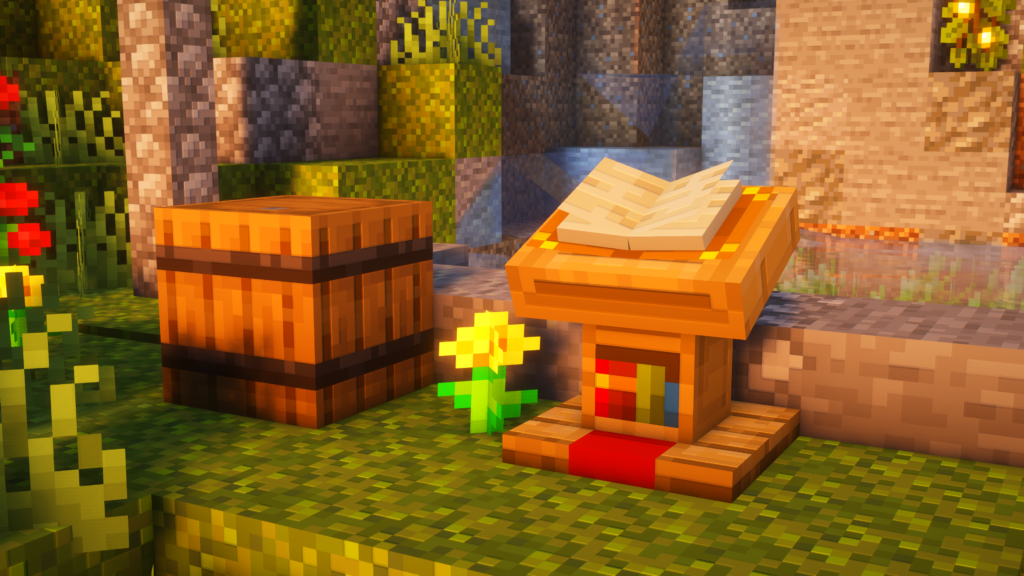
Switching to Vulkan will make the game feel faster and look prettier in many ways. Vulkan is a modern graphics tool from 2016 that gives developers more direct control over the video card. It can use several parts of your computer at the same time, which is called multi-threading. Right now, OpenGL does most work on just one thread, so the game can slow down in big worlds or when you have lots of resources. With Vulkan, you should see higher frame rates, meaning the game runs smoother with less stuttering or lag, even when you build huge cities or explore far away.
The biggest win is for the looks of the game. Once the switch is complete, Mojang can add Vibrant Visuals to Java Edition.
Important Links
| Purpose | Status |
|---|---|
| Official Minecraft Discord Channel | Available |
| Official Transition Announcement | Released |
| Bug Reporting & Feedback | Ongoing |
| Vulkan Snapshot Testing | To Be Announced |
FAQ: Minecraft Java Edition Switching to Vulkan (2026)
What is the Vulkan graphics API?
Vulkan is a modern, low-overhead graphics API that gives developers more direct control over the GPU. It’s designed for high performance and is used in many modern games.
Why is Mojang switching from OpenGL to Vulkan?
OpenGL is outdated, no longer updated, and deprecated on macOS. Vulkan provides better performance, stability, cross-platform support, and the foundation for advanced graphics like those in the Vibrant Visuals update
When will Vulkan be available in Minecraft?
Testing begins in snapshots sometime during summer 2026. A toggle between Vulkan and OpenGL will be available during the testing phase. OpenGL will be removed later once Vulkan is stable.
Why is Mojang switching from OpenGL to Vulkan?
OpenGL is outdated, no longer updated, and deprecated on macOS. Vulkan provides better performance, stability, cross-platform support, and the foundation for advanced graphics like those in the Vibrant Visuals update.