Minecraft Java Edition has used OpenGL as its graphics API for over 17 years. In February 2026, Mojang officially announced a major change: the game is gradually switching from OpenGL to the modern Vulkan graphics API. This is one of the biggest technical updates in Minecraft’s history and is a key step toward the long-awaited Vibrant Visuals overhaul for Java Edition.
In simple words, Vulkan is a low-level, high-performance graphics API that gives developers more direct control over the GPU. This means better performance, fewer driver bugs, more efficient multi-threading, and room for future graphical improvements that were difficult or impossible with OpenGL.
Why Mojang Is Switching to Vulkan
OpenGL has served Minecraft well, but it has limitations:
- It is an old API (first released in 1992) with high CPU overhead.
- Modern games need better multi-threading and explicit GPU control.
- Driver bugs and compatibility issues are common across different GPUs and operating systems.
- It makes it harder to add advanced features like improved lighting, better shadows, or ray tracing in the future.
Vulkan solves many of these problems. It is lower-level, more efficient, and widely supported by all major GPU vendors (NVIDIA, AMD, Intel, and even Apple via MoltenVK). Mojang chose Vulkan because it supports all their future plans for Vibrant Visuals while keeping compatibility across Windows, Linux, and macOS.
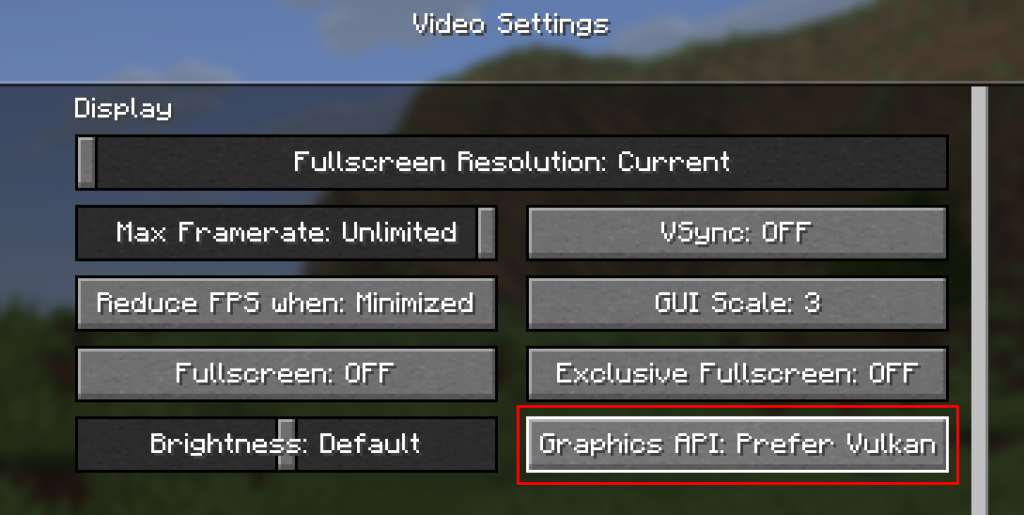
The switch was announced on February 18, 2026, in the official article “Another step towards Vibrant Visuals for Java Edition.” Mojang plans to introduce Vulkan in snapshots during summer 2026, with a toggle so players can switch between OpenGL and Vulkan during testing. OpenGL will eventually be removed once Vulkan is stable and performant enough.
Current Status of Vulkan API in Minecraft
- Official Mojang Implementation: Still in early development. Vulkan-based snapshots are expected to start rolling out in summer 2026 (likely around vanilla 26.2-snapshot-2 or later). During the testing period, you will be able to toggle between the old OpenGL renderer and the new Vulkan renderer.
- Community Mod – VulkanMod: A popular Fabric mod by xCollateral already provides a full Vulkan renderer replacement. It has been available for several years and is actively updated. Many players are already using it on 1.21.x versions and reporting big FPS gains.
- Performance Mods Adaptation: Sodium (the famous optimization mod) is being ported to work with Vulkan. Iris Shaders is also evolving — the team is working on a Vulkan-compatible version (sometimes referred to as Aperture in community discussions).
What Vulkan Brings to Minecraft
- Lower CPU usage and better multi-threading → more stable FPS, especially in large worlds or with many entities.
- Reduced driver overhead → fewer random stutters and crashes caused by GPU drivers.
- Better scaling on modern multi-core CPUs and high-end GPUs.
- Community tests with VulkanMod often show 20–100%+ FPS gains compared to vanilla or even Sodium + OpenGL in certain scenarios.
- Easier implementation of advanced lighting, global illumination, better shadows, and particle effects.
- Better support for ray tracing (though official RTX-like features may still take time).
- Improved transparency, reflections, and atmospheric effects as part of Vibrant Visuals.
Better Cross-Platform Support
- Vulkan works consistently across Windows, Linux, and macOS (via MoltenVK on Apple Silicon).
- Fewer platform-specific bugs.
Modding Implications
- Short-term pain: Many mods that directly use OpenGL rendering will need updates.
- Long-term gain: A cleaner, more modern rendering engine makes it easier for modders to add advanced features.
- Sodium and Iris are already preparing for the transition, which is good news for performance enthusiasts.
Performance Expectations in 2026
- Vanilla + Vulkan (future): Expect noticeably smoother gameplay, especially in crowded areas or with high render distance.
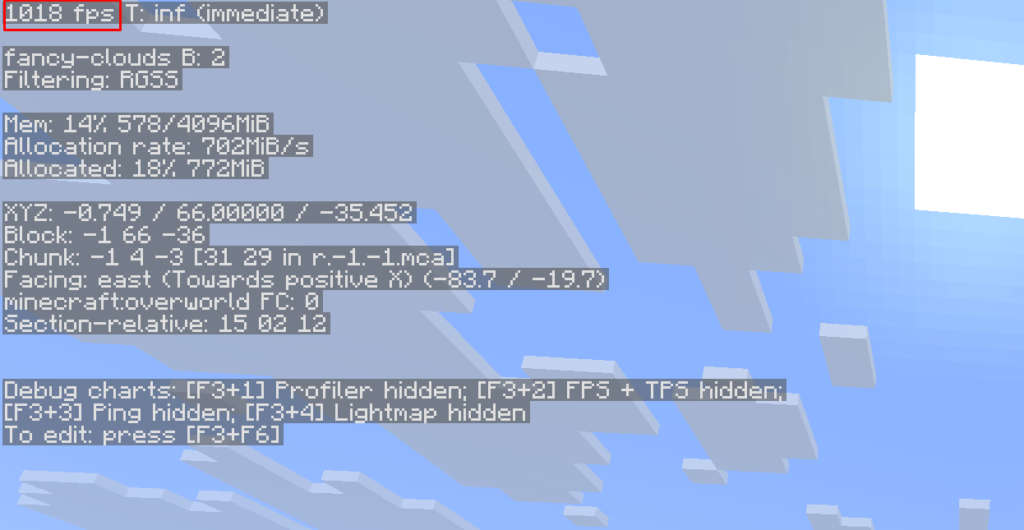
- With Optimization Mods: VulkanMod + future Sodium ports can deliver 500–2000+ FPS on high-end PCs in simple scenes.
- With Shaders: Early tests show Vulkan can maintain higher FPS than OpenGL + Iris in many cases, but full shader support is still maturing.
- On Lower-End Hardware: Vulkan’s efficiency helps older GPUs and integrated graphics run the game better.
Real-world results vary depending on your GPU, CPU, drivers, and world complexity. Always test yourself.
Potential Downsides and Challenges
- Mod Compatibility: Some older or highly specialized rendering mods may break temporarily during the transition.
- Mac Users: Apple Silicon uses MoltenVK (Vulkan-to-Metal translation). Performance is good but not always identical to native Vulkan on Windows/Linux.
- Driver Requirements: You need a GPU that supports Vulkan 1.2 or higher (most GPUs from 2015 onward are fine, but very old hardware may struggle).
- Transition Period: Expect some bugs and performance tuning in early snapshots.
Mojang has promised a long testing period with the ability to switch back to OpenGL, so players won’t be forced into an unstable renderer immediately.
How to Prepare for Vulkan Right Now
- Keep your GPU drivers updated (NVIDIA, AMD, Intel).
- Experiment with VulkanMod if you want to test the technology today.
- Follow official Minecraft snapshots starting in summer 2026.
- Back up your worlds and mods before trying experimental renderers.
The Road Ahead: Vibrant Visuals and Beyond
The switch to Vulkan is not just about performance — it is a foundation for Vibrant Visuals, Mojang’s long-term plan to modernize Java Edition’s graphics. We can expect better lighting, more realistic water and foliage, improved weather effects, and eventually features that close the visual gap between Java and Bedrock (while keeping Java’s unique modding strengths).
This change shows Mojang is serious about keeping Java Edition competitive and visually appealing for years to come.
Final Thoughts
The move from OpenGL to Vulkan is one of the most exciting technical updates in Minecraft’s history. It promises better performance, fewer bugs, and a brighter future for graphics and modding. While the official rollout is still months away, the community (especially through VulkanMod) is already showing what’s possible.
Whether you’re a casual player wanting smoother FPS or a modder excited for new rendering possibilities, Vulkan is going to make Minecraft feel fresher and more capable in 2026 and beyond.
Stay tuned for summer snapshots — the future of Minecraft Java rendering is looking very bright!
Important Links
| Resource | Link |
|---|---|
| Official Mojang Announcement | https://www.minecraft.net/en-us/article/another-step-towards-vibrant-visuals-for-java-edition |
| VulkanMod on Modrinth | https://modrinth.com/mod/vulkanmod |
| Fabric Loader | https://fabricmc.net/ |